
Address: High Street, Wimborne Minster, Dorset, BH21 1HT
Admission: Free – donations welcome
Opening Times:
Monday–Saturday: 10:00am–4:00pm
Sunday: Open for services and 12:30pm–6:00pm
Opening times and access may vary for special services, events and Bank Holidays, so check before making a special journey.
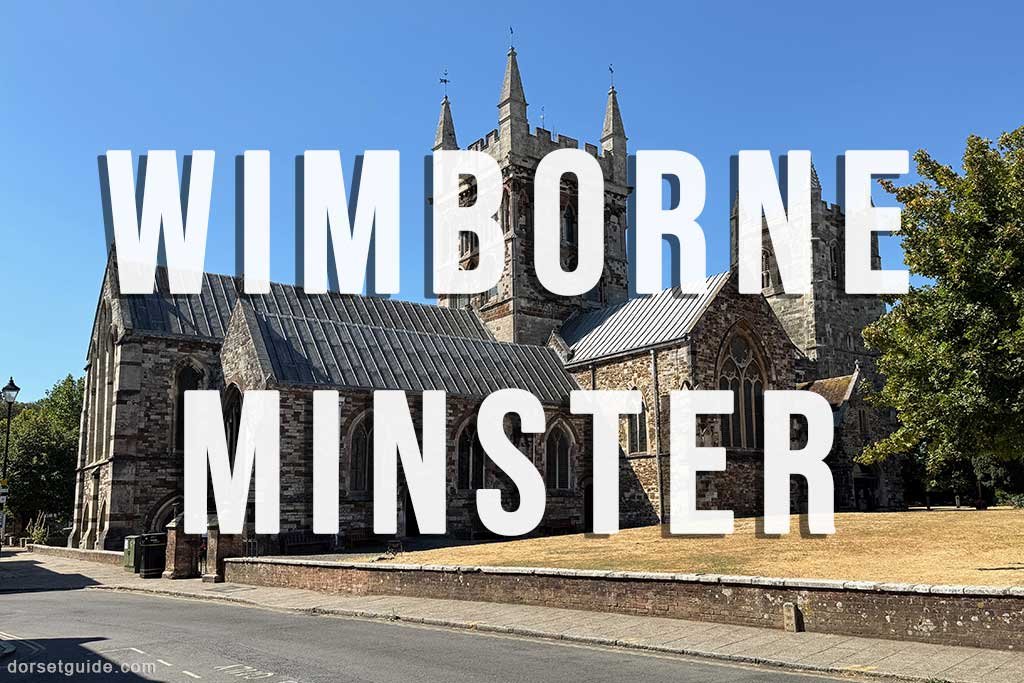
Wimborne Minster is one of Dorset’s most impressive historic churches and the landmark that gives the town its name. Its distinctive twin towers dominate the centre of Wimborne and are visible from several approaches to the town.
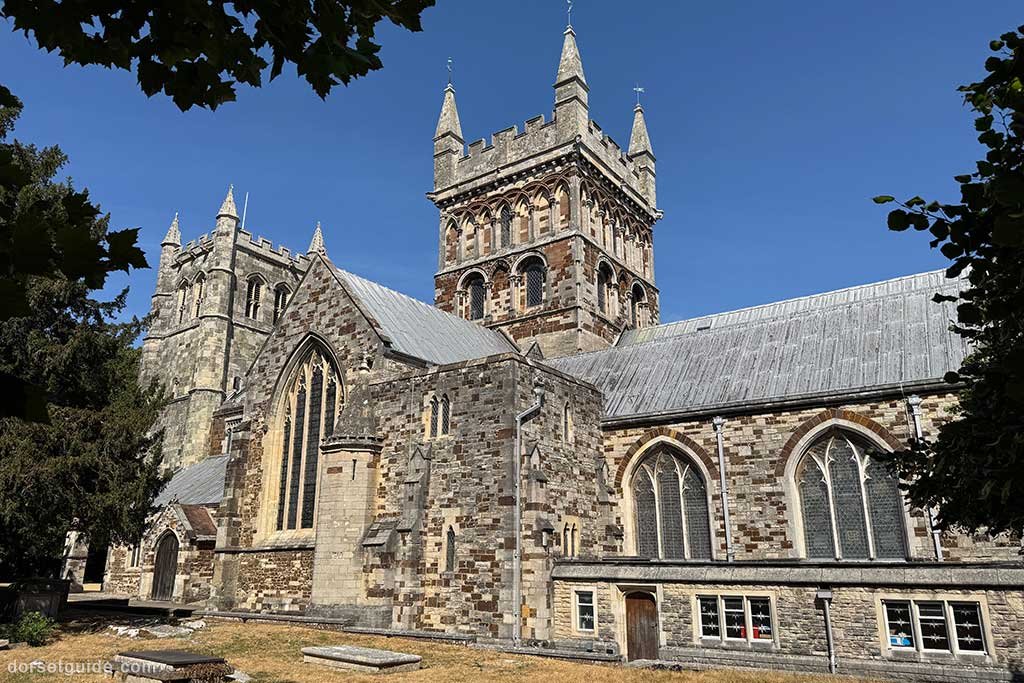
The site has been a centre of Christian worship for more than 1,300 years, while most of the magnificent building seen today dates from the 12th century. Inside are several unusual treasures, including a medieval astronomical clock, one of England’s surviving chained libraries and an Anglo-Saxon chest.
Wimborne Minster remains an active parish church and admission is free.
History of Wimborne Minster
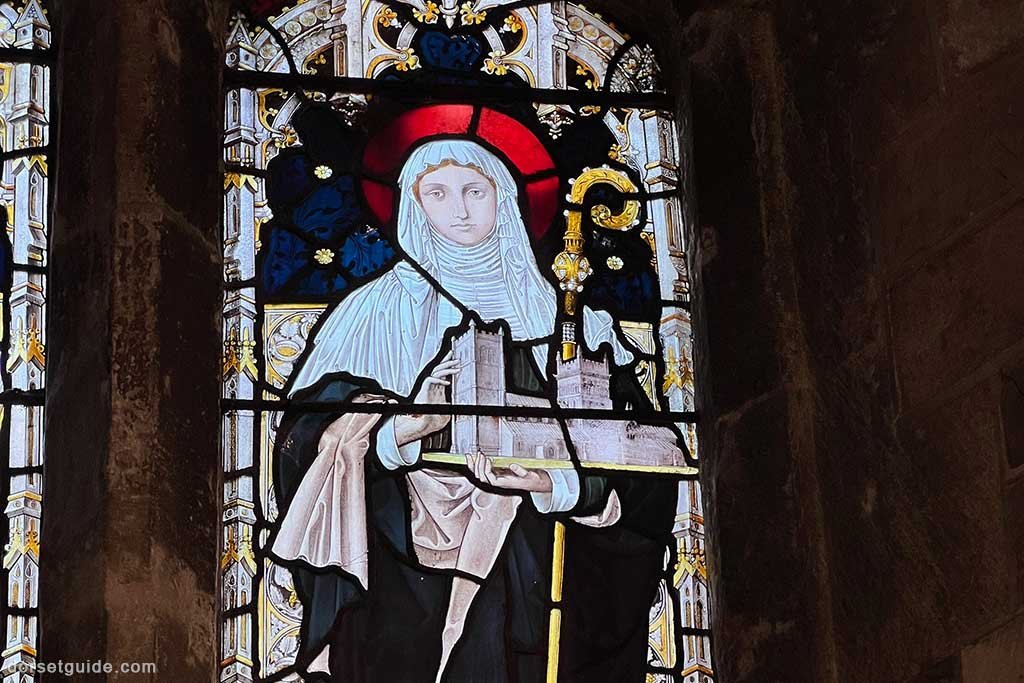
The history of the Minster can be traced back to around 705 AD, when St Cuthburga, sister of King Ine of Wessex, founded a nunnery at Wimborne. Nuns from the community later travelled to continental Europe to assist St Boniface with his missionary work.
The nunnery was destroyed during a Danish raid in 1013. In 1043, Edward the Confessor established a college of secular canons at Wimborne, and most of the present church was subsequently built by the Normans between about 1120 and 1180.
The Minster continued to develop throughout the Middle Ages. A spire was added during the 13th century but collapsed around 1600 and was never rebuilt. In 1318, Edward II made the Minster a Royal Peculiar, placing it outside normal diocesan jurisdiction, a status it retained until 1846.
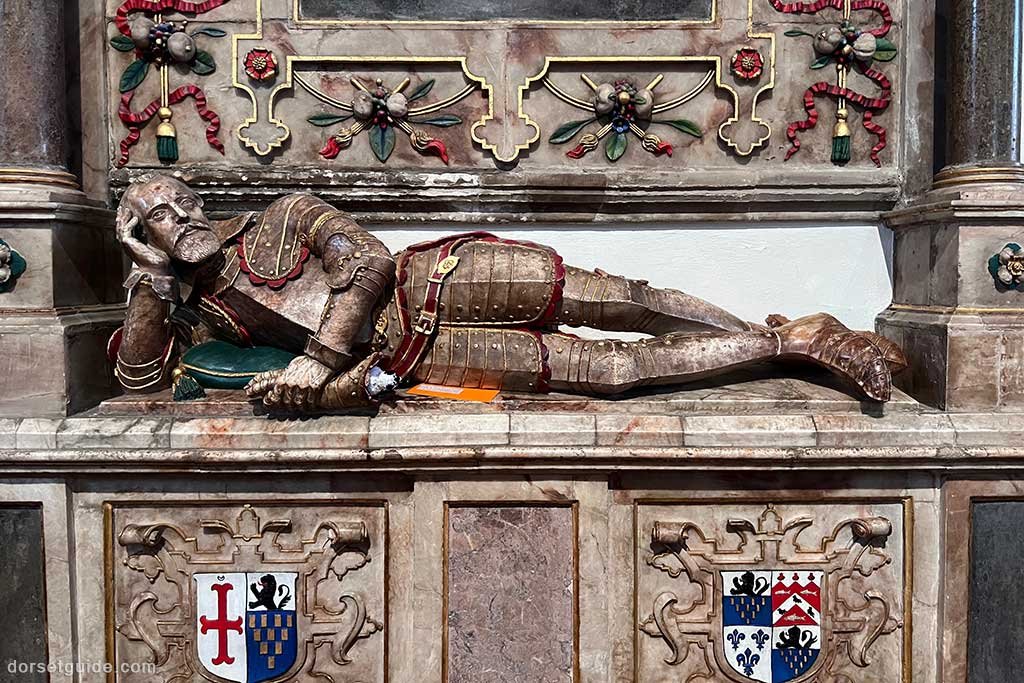
In the late 15th century, Lady Margaret Beaufort, mother of Henry VII, founded a chapel here. The priest was also required to teach grammar, helping establish the educational tradition that eventually developed into today’s Queen Elizabeth’s School.
The church underwent extensive restoration between 1855 and 1857, when much of its Victorian stained glass and decorative tiling was added.
Things to See in Wimborne Minster
Astronomical Clock
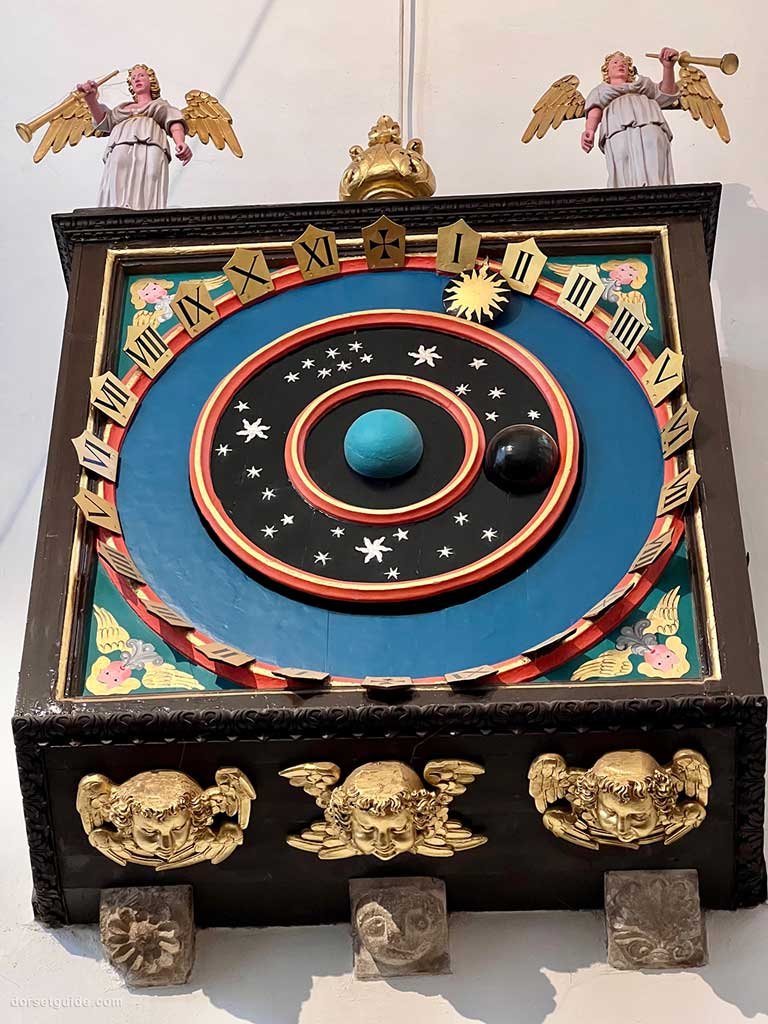
One of the Minster’s most famous features is its astronomical clock, whose origins date back to the medieval period.
Its colourful face reflects the medieval understanding of the universe, depicting the Earth at the centre with the Sun travelling around it. Although the mechanism has been altered over the centuries, the clock remains one of the highlights of a visit.
Chained Library
The Chained Library is one of Wimborne Minster’s greatest treasures and one of only a small number of surviving chained libraries in England.
The first books were donated in the 17th century, with the library established in 1695. Books were chained to prevent them being removed while still allowing people to read them at a time when books were extremely valuable.
The library is normally open on selected weekdays from Easter until the end of October. It is reached by stairs and is not wheelchair accessible, although a filmed tour is available.
Quarter Jack
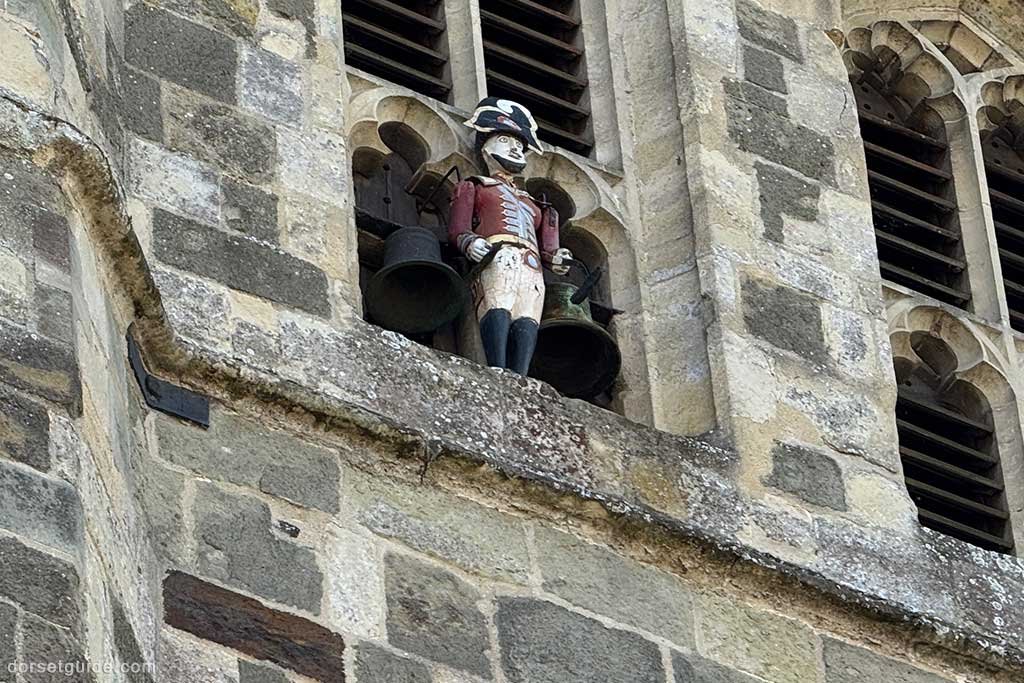
Look up at the north side of the West Tower and you’ll find the Quarter Jack, a colourful figure installed in 1612 that strikes the bells every quarter of an hour.
The Quarter Jack is outside the church, so don’t forget to look for him when walking around the Minster.
The Man in the Wall
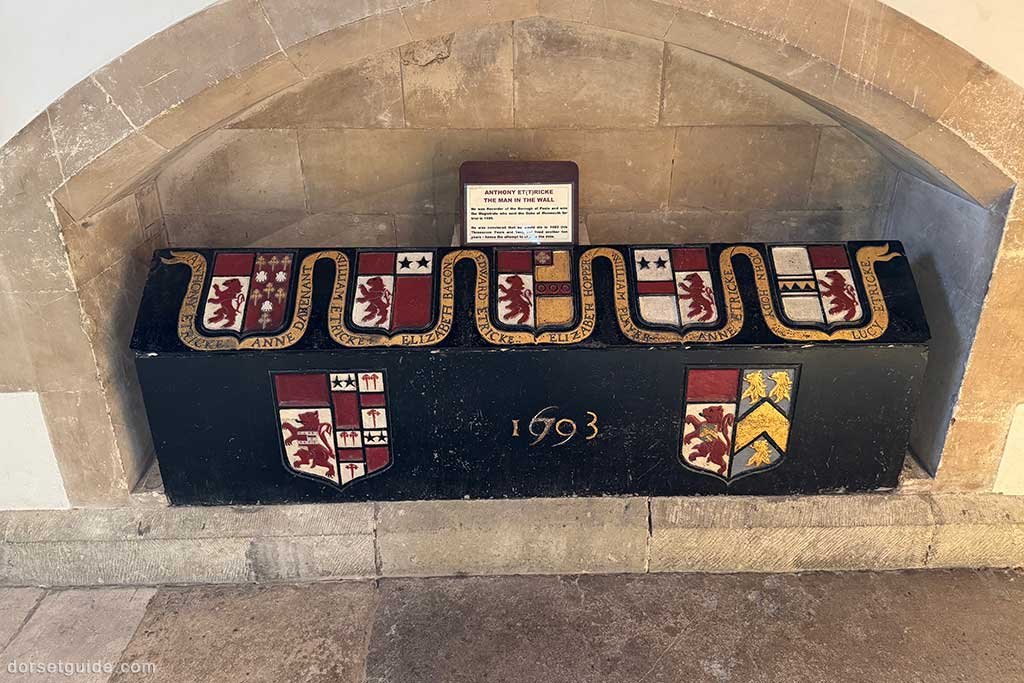
One of the Minster’s strangest curiosities is the Man in the Wall, the unusual burial place of local magistrate Anthony Ettrick.
Ettrick arranged his burial place during his lifetime, with his coffin eventually to be placed within a recess in the Minster wall. Believing he would die in 1693, he had that year painted on his coffin.
His prediction was somewhat premature – Ettrick survived until 1703, so the date on his coffin had to be altered. His unusual resting place became known as the Man in the Wall and remains one of the Minster’s most memorable curiosities.
Anglo-Saxon Chest
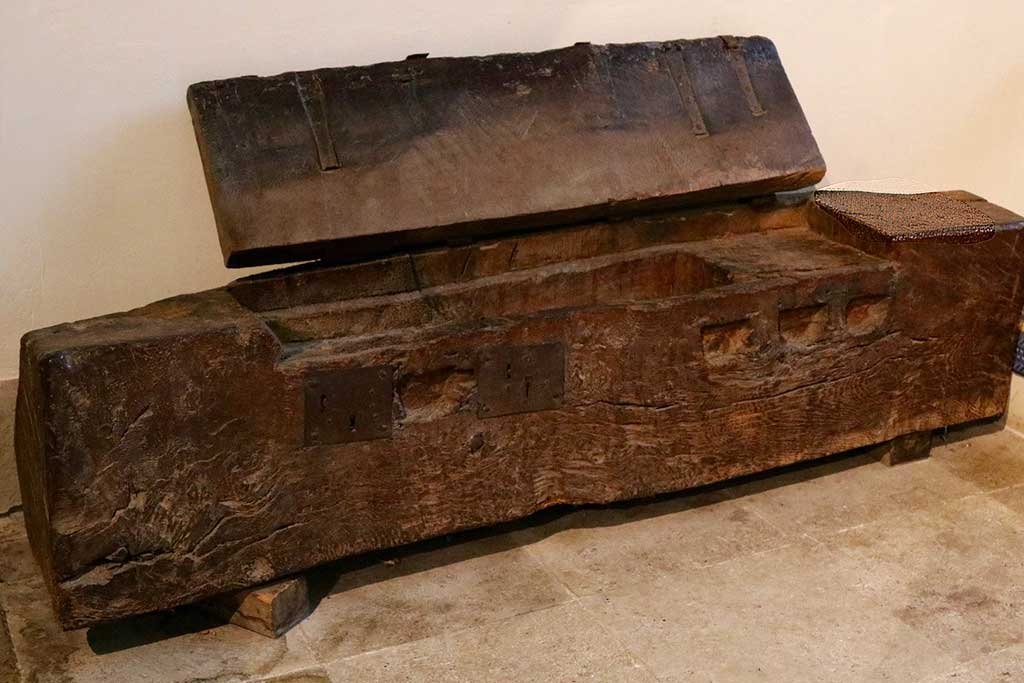
An Anglo-Saxon chest preserved inside the Minster provides a remarkable connection with Wimborne’s history before the Norman Conquest.
It is one of the oldest objects in the church and is thought to have survived from the period of the earlier religious community that occupied the site.
Tombs and Memorials
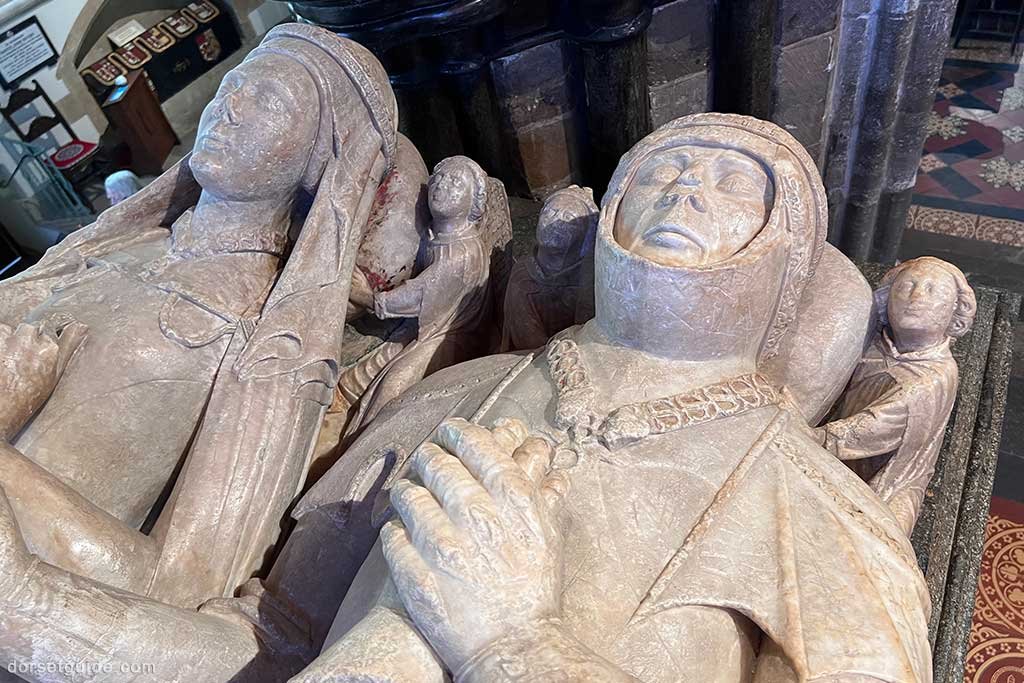
Among the many historic monuments are the tombs of John Beaufort, Duke of Somerset, and Margaret Beauchamp, parents of Lady Margaret Beaufort and grandparents of Henry VII.
Visitors can also look out for several unusual carvings, memorials and historic brasses while exploring the church.
Architecture and Stained Glass
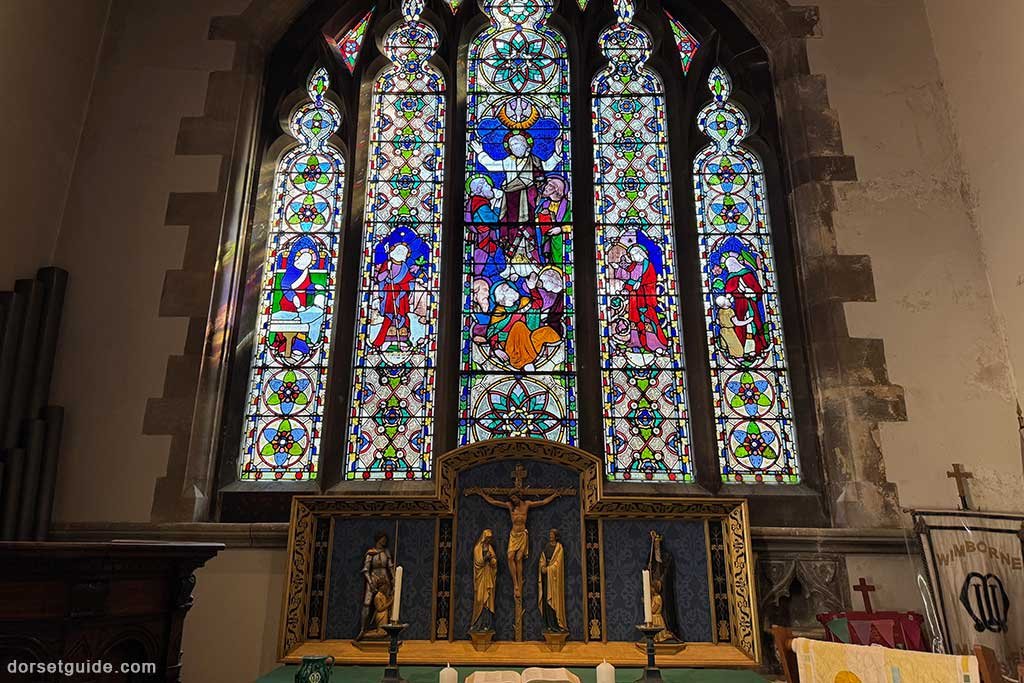
Although much of Wimborne Minster is Norman in origin, centuries of alterations have created an interesting mixture of architectural styles.
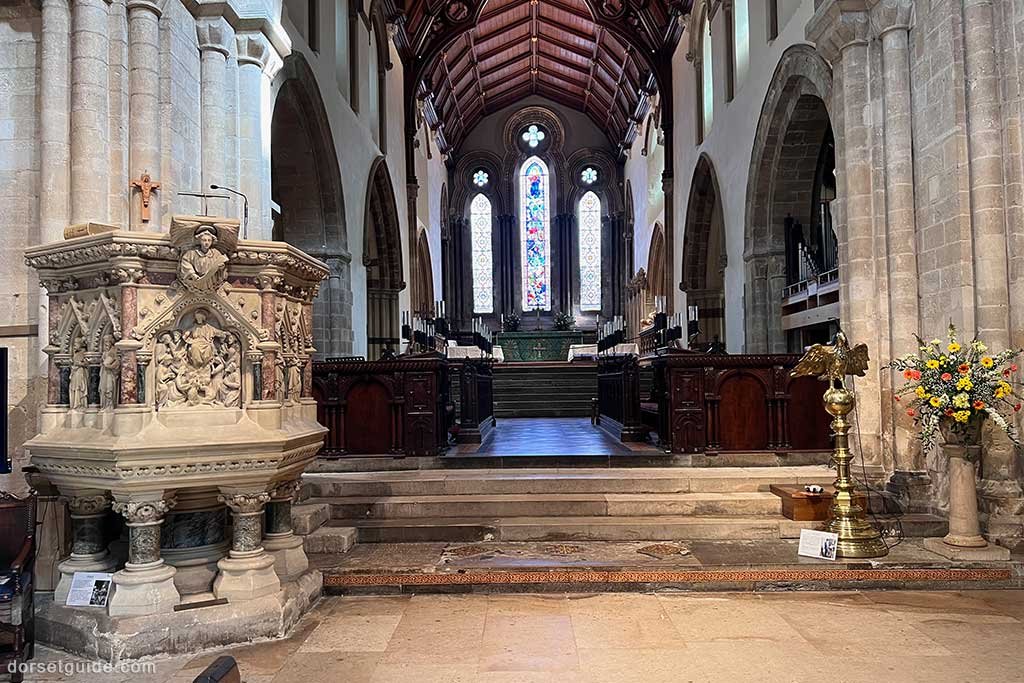
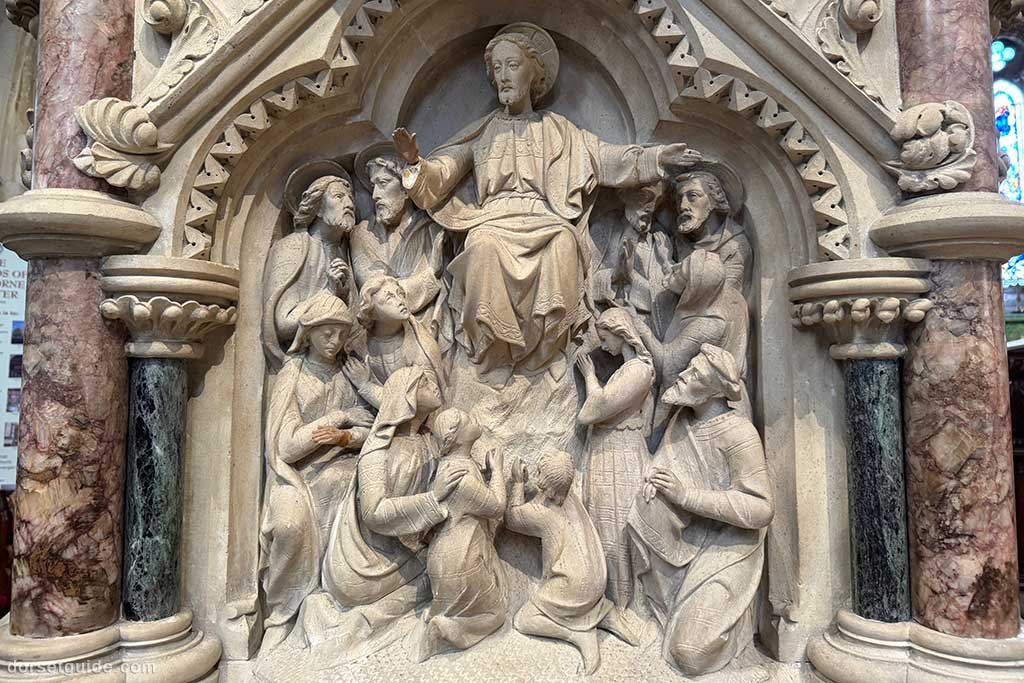
The extensive Victorian restoration of the 1850s added much of the stained glass seen today, together with colourful encaustic and geometric tiles around the chancel and high altar.
A surviving medieval wall painting is another interesting feature and contains several layers of decoration painted at different periods.
Visiting Wimborne Minster
Wimborne Minster stands in the heart of the town, close to The Square, Museum of East Dorset, shops, cafés and River Allen.
Entry is free, although donations towards maintaining the historic building and supporting its ministry are welcomed.
Wheelchair access is available through St George’s Door, on the same side of the church as the main entrance. The Chained Library is not wheelchair accessible.
Public toilets are approximately 30 metres away across the Green, while King Street Car Park provides convenient parking close to the church and town centre.
As the Minster remains an active place of worship, access can occasionally be restricted for services and special events.
Related Pages
- Wimborne Minster Church
- Wimborne Folk Festival
- Wimborne Walks
- Deans Court House
- Kingston Lacy House and Gardens (NT)
- Badbury Rings
- White Mill
- Knowlton Church and Earthworks
- Cranborne Chase
- Blandford Forum