
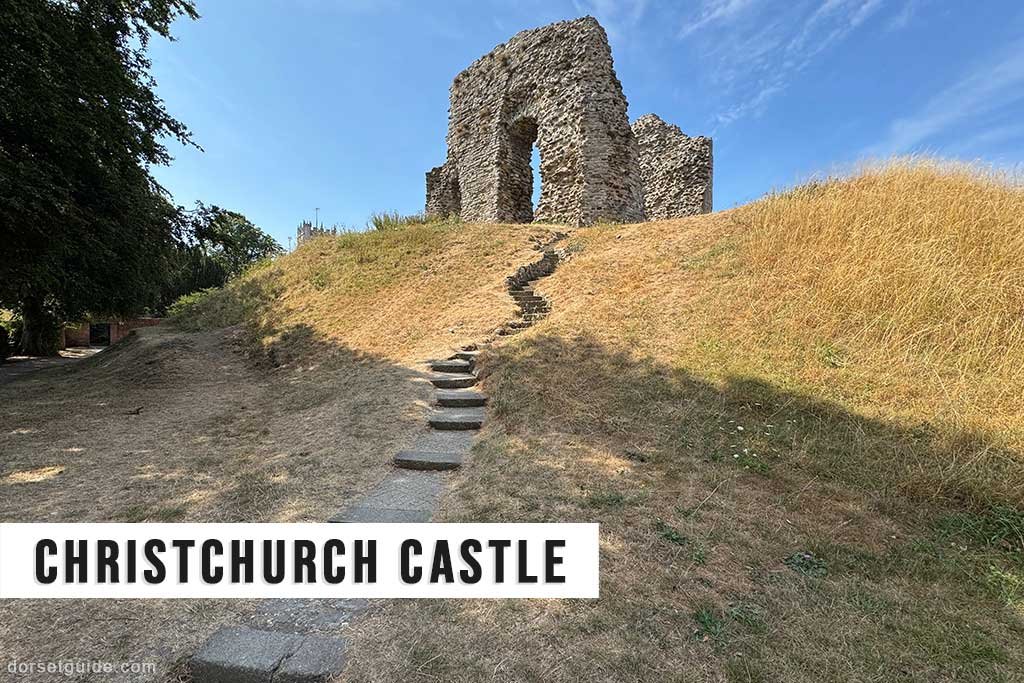
Standing beside Christchurch Priory on the banks of the River Avon, Christchurch Castle is one of Dorset’s oldest and most important historic landmarks. Although much of the castle now survives as picturesque ruins, it has dominated the town for nearly 1,000 years and offers visitors a fascinating insight into Christchurch’s Norman past.
The castle occupies a commanding position overlooking the river, reflecting its original role in defending the important Saxon settlement that grew into modern-day Christchurch. Today, visitors can explore the peaceful castle grounds, climb the ancient motte for views across the town and rivers, and discover one of England’s finest surviving Norman buildings nearby.
With Christchurch Priory, the Norman House, Convent Walk and Christchurch Quay all just a few minutes’ walk away, the castle is an essential stop when exploring historic Christchurch.
History of Christchurch Castle
Although Christchurch was already an important Saxon settlement, the castle was built shortly after the Norman Conquest of 1066 to strengthen control over the area and protect the strategic crossing of the River Avon. Like many early Norman fortifications, it was originally constructed as a motte-and-bailey castle, consisting of a large earth mound topped by timber defences, together with an enclosed courtyard below.
During the 12th century, many of the original timber buildings were replaced with stone, creating the castle whose remains can still be seen today. Over the following centuries, Christchurch Castle served as both a military stronghold and an administrative centre before gradually losing its defensive importance.
Like many castles across England, Christchurch Castle suffered during the English Civil War. Much of the structure was deliberately damaged to prevent it being used as a military fortress again, leaving the impressive ruins that survive today.
What to See
The Castle Keep
The remains of the stone keep are the most recognisable part of Christchurch Castle. Although only fragments of the original building survive, they give an impression of the castle’s former scale and importance. Information panels around the site help visitors understand how the castle would have looked during the Middle Ages.
The Castle Motte
The large grassy motte, or earth mound, is one of the best-preserved features of the castle. A short climb to the top rewards visitors with attractive views across Christchurch Priory, the River Avon, Christchurch Quay and the surrounding town. It is one of the best viewpoints in central Christchurch and a popular place for photography.
Castle Grounds
The castle stands within attractive public gardens overlooking the River Avon. Mature trees, open lawns and riverside paths create a peaceful setting that contrasts with the site’s military past. The picturesque Christchurch Cricket Club pavilion, set within the grounds, adds to the charm of the area and creates one of the town’s most photographed views during the cricket season.
Behind the castle, the peaceful Castle Gardens are a pleasant place to explore, with colourful planting, mature trees and a historic mausoleum dating from the late 18th century. An information plaque tells the unusual story of Mrs Perkins, who feared being buried alive and requested that her mausoleum be designed so she could escape if she ever regained consciousness. Together with the nearby Priory and riverside setting, the gardens make the castle one of Christchurch’s most attractive historic locations.
The Norman House
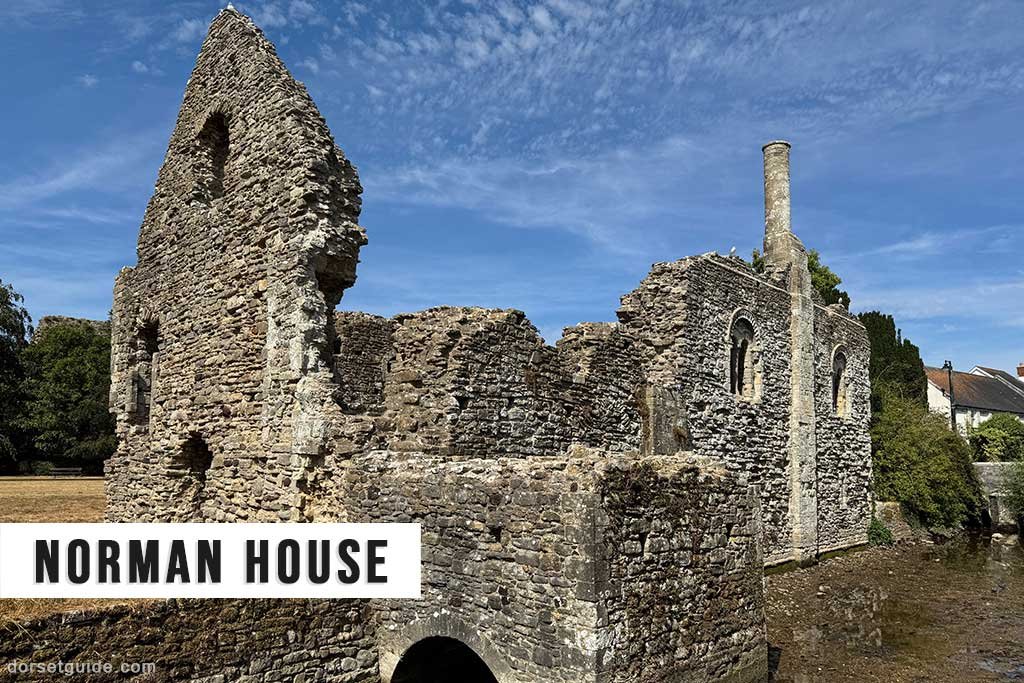
Standing beside the castle is the remarkable Norman House, one of the finest surviving examples of Norman domestic architecture in England. Dating from the 12th century, the building provides a rare glimpse into everyday life during the Norman period and complements a visit to the castle perfectly.
Visiting Christchurch Castle
Christchurch Castle is free to visit and can easily be explored in less than an hour, although many visitors combine it with nearby attractions to enjoy a longer visit. The castle is only a short walk from Christchurch Priory, Christchurch Quay and the historic town centre, making it easy to include as part of a leisurely day exploring Christchurch.
The grounds are open throughout the year and are particularly attractive during the spring and summer, when the surrounding gardens are at their best. Comfortable footwear is recommended if you plan to climb the motte, although the paths around the castle remain easy to follow for most visitors.
Nearby Attractions
A visit to Christchurch Castle can easily be combined with several of the town’s other historic attractions.
Christchurch Priory
Standing immediately beside the castle, Christchurch Priory is one of England’s finest parish churches. Its magnificent architecture, beautiful interior and peaceful riverside setting make it the perfect companion to a visit to the castle.
Convent Walk
This attractive 500-metre tree-lined path follows the Mill Stream between the castle, Place Mill and Christchurch Quay. Built in 1911 to commemorate the coronation of King George V, it’s one of Christchurch’s most picturesque short walks.
Ducking Stool
Hidden away in nearby Ducking Stool Lane, this unusual historic curiosity recalls a time when offenders were punished by being lowered into the river. It’s an interesting reminder of Christchurch’s medieval past and only a short walk from the castle.
Christchurch Quay
Just a few minutes’ walk away, Christchurch Quay is one of the town’s most popular riverside attractions. Relax beside the River Stour, watch the swans and sailing boats, hire a self-drive motor boat or take a boat trip across Christchurch Harbour.